 Short answer: Yes. Here’s why.
Every year, the Virginia Department of Transportation (VDOT) tracks its progress in expanding bicycle infrastructure across the Commonwealth. VDOT recently reported that in Fiscal Year 2025 (July 2024 – June 2025), VDOT added nearly 82 miles of new bike facilities—including shared-use paths, bike lanes, and shared lane markings—across 116 projects. Northern Virginia led the state with more than 31 miles of new bike infrastructure, and Fairfax County topped the list for new on-street bike lanes.
That’s worth celebrating—but it’s a relatively tiny amount and a reminder of how far we still have to go.
The Alternative? Traffic, Debt, and Struggle
At the same time as this modest progress, the auto-centric status quo continues to squeeze residents:
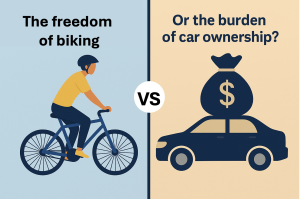
- The Washington Post reported this week that the average price of a new car has topped $50,000—a record high. Nearly 1 in 4 car owners now owe more on their vehicles than the cars/trucks are actually worth.
- Bloomberg added that auto loan delinquencies are soaring, with more than 5% of auto debt at least 90 days past due and a 51% spike in late payments since 2010.
Biking Isn’t Just a Lifestyle—It’s a Lifeline
In Fairfax County, we obviously will need to rely on cars for the foreseeable future, but just imagine if biking and walking were realistic options for more people:
- Lower transportation costs for families already struggling with debt.
- Healthier communities with less air pollution and more physical activity.
- Shorter commutes as more people are able to get around without sitting in traffic.
- More equitable access to jobs, schools, and services—especially for those who can’t afford a car.
That’s the future FABB is working toward. And it starts with more and better bike infrastructure—protected lanes, safe crossings, complete trails, and community-supported planning.
Let’s Keep Moving Forward
We’re grateful for the progress made in 2025. But we’re also mindful of the reality: until bike infrastructure is treated as essential—not just nice to have—too many people will be left with only expensive, unsustainable, or unsafe ways to get around.
So we’ll keep asking the question: Wouldn’t it be better to have more bike lanes and active transportation options?
And we hope the answer—from elected officials, planners, and neighbors—is a resounding yes.
Want to help and be a part of the change we need? Contact us at [email protected].


