Virginia is back in the national top 10 in the League of American Bicyclists’ 2026 Bicycle Friendly State Rankings. The Commonwealth rose from 12th in 2024 to 10th nationwide and now ranks first among 13 Southern states. The League’s biennial rankings and state report cards give us plenty to celebrate and show where Virginia still needs to make riding safer and easier.
 Where Virginia Leads
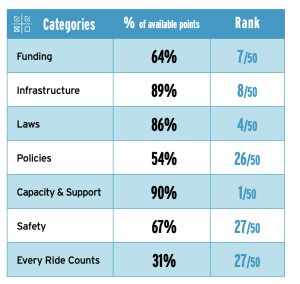
Virginia ranked first nationally for Capacity & Support, fourth for bicycling laws, seventh for funding, and eighth for infrastructure. The League praised the Virginia Department of Transportation for strengthening its technical support for localities and creating a statewide map that shows trails, bike lanes, sidewalks, and crosswalks. That cooperation matters in Fairfax County, where many of the roads that need safer bike connections are under state control.
Virginia also has a Complete Streets policy and a three-foot safe passing law, and it spent at least 2 percent of its federal transportation funds on biking and walking improvements. The League highlighted Virginia’s Stop Super Speeders law, which allows courts to require speed-limiting devices for drivers convicted of certain speeding offenses.
Where Virginia Needs to Improve
Virginia ranked 26th for policies and 27th for safety, and its statewide bicycle plan dates to 2011. An updated plan could help VDOT and localities close gaps between existing trails and bike lanes, prioritize protected lanes on busy roads, and make crossings safer. Virginia also ranked 27th in Every Ride Counts, which looks at how states measure and encourage bicycling. Just 0.3 percent of Virginia commuters bike to work, according to the report card.
 Riders Still Waiting for Safer Streets
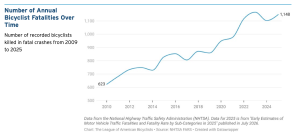
Across the country, states have put federal funds to work on walking and bicycling projects, updated street design standards, and planned more connected bike networks. Despite those improvements, more than 1,000 bicyclists died in U.S. traffic crashes each year from 2022 through 2025, according to federal data cited by the League. Dissatisfaction with riding conditions also remains widespread. In the League’s first public survey for the rankings, only 4 percent of respondents said their local infrastructure made it safe to bike to most nearby destinations.
Explore the national rankings and report cards.
Safe, connected bike routes can replace short car trips, ease pressure on busy roads, and give more people a practical way to reach schools, shops, jobs, and transit. Yet the U.S. Department of Transportation is urging Congress to restrict federal funding for bike lanes and other bicycle infrastructure that it says reduce motor vehicle throughput. Fairfax County and communities across Virginia need continued federal investment to make bicycling a safe, everyday transportation option.
Join FABB in urging our elected representatives and transportation officials to keep Virginia’s progress going. Together, we can press for the funding and street improvements that make it safer to bike to school, to work, or just around the neighborhood.


