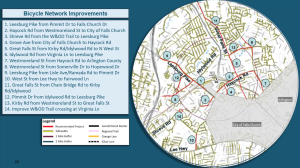
 Just three years ago this week, FABB was pushing for public support and involvement in the West Falls Church Active Transportation Study, which aimed to improve pedestrian and bicycle connectivity around the West Falls Church Metro Station area. This study, conducted by the Fairfax County Department of Transportation (FCDOT), identified gaps in the active transportation network and proposed solutions for safer access to the Metrorail station and surrounding neighborhoods.
The project stemmed from a landmark 2021 Comprehensive Plan amendment that reimagined the area as a vibrant, mixed-use, transit-oriented community. This vision included new bicycle and pedestrian connections, green infrastructure, and affordable housing options. FABB advocated for the inclusion of ample bike parking and amenities such as weather-protected shelters and commuter facilities, ensuring the area would truly support multimodal transportation. This effort built on our participation in 2015 in a public meeting on the city’s draft comprehensive plan, which spoke to the need for multiple modes of transportation and specifically discussed increasing the potential to walk and bicycle to local destinations.
Throughout 2022, FABB encouraged local cyclists to attend virtual and in-person meetings to voice their support for better bike infrastructure on critical routes like Route 7, Shreve, and Haycock Roads. As a public advisory group member, FABB ensured that bicyclists’ needs were prioritized in the study’s recommendations, which will guide future infrastructure investments.
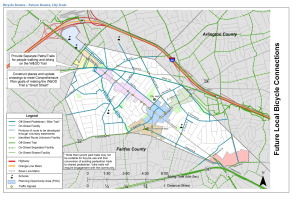
2015 Falls Church Bicycle Master Plan Future Bicycle Connections Map
Most recently, FABB has been closely following Falls Church’s efforts to revise its Bicycle Master Plan. This comprehensive update, which has been in development for more than two years, represents a major step forward in the city’s commitment to a multimodal future. In December 2024, the Planning Commission held a work session to review the latest draft, which includes a two-tiered approach to improving bicycle infrastructure. Top-priority projects include an east-west connector between the W&OD Trail and the city’s secondary-school campus.
While challenges remain—such as budget constraints and navigating public skepticism about reallocating road space—the dedication of our friends at Bike Falls Church and the city to making bicycling safer and more accessible is evident.
Developments in Falls Church demonstrate the power of consistent advocacy and community involvement. But there’s still work to do to bring safer streets and better bike infrastructure to Falls Church and beyond.
Together, we can make biking safer and more accessible for everyone.


