 Fairfax County is considering ways to make a challenging stretch of Route 29 safer and more comfortable for people who bike, walk, roll, and use transit—and local riders have an important opportunity to help shape those improvements.
The Fairfax County Department of Transportation (FCDOT) will hold an in-person public meeting on the Route 29 Active Transportation Study on Wednesday, October 14, 2026, at 7 p.m., at Timber Lane Elementary School, 2737 West Street, Falls Church. FCDOT will present recommended improvements to sidewalks, bicycle facilities, transit stops, and crossings along Route 29 between I-495 and Tripps Run at the Falls Church City border, just east of South Maple Avenue.
Following the presentation, at approximately 7:30 p.m., attendees will be able to review project exhibits, talk with county staff, ask questions, and provide comments. An online survey is also expected to be available around the time of the meeting.
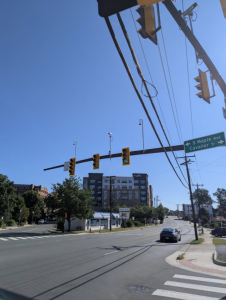
For bicyclists and pedestrians, this is an especially important corridor. Route 29 is a wide, divided highway with numerous at-grade intersections and turn lanes. Crossing it can be difficult, effectively separating neighborhoods and destinations on its north and south sides. People biking or walking along the corridor also face uncomfortable conditions and potentially dangerous interactions with turning vehicles at intersections.
The study offers an opportunity to rethink those conditions. Although Fairfax County’s current Comprehensive Plan calls for eventually widening Route 29 from four to six lanes, this study is focused on improving active transportation and transit facilities. Its goals include creating a more comfortable environment for bicyclists and pedestrians, improving connections across Route 29, providing better access to transit, and reinforcing the principle that the corridor must safely accommodate all users.
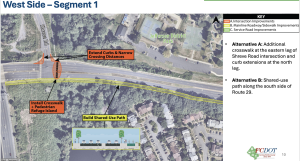
Improvement Alternatives Under Consideration.
Route 29 can also become an important link in the larger regional trail and bicycle network. Its proximity to the National Capital Trail Network, including the existing I-66 trail corridor and planned connections toward Route 50, creates opportunities to fill gaps in the network and provide more ways to reach neighborhoods, businesses, schools, parks, libraries, and transit without a car.
FABB encourages local riders—especially those who live, work, shop, or ride near Route 29—to attend the October 14 meeting and speak up for safe, comfortable, and well-connected bicycle facilities and crossings. Public input now can help ensure that improvements to this important corridor make bicycling and walking safer and more practical rather than perpetuating the barriers that exist today.
For more information on the Route 29 Active Transportation Study, visit the study webpage: https://www.fairfaxcounty.gov/transportation/study/route29-active-transportation.


