As we celebrate FABB’s 20th anniversary in 2025, we’re taking the opportunity to reflect on two decades of advocating for better bicycling in Fairfax County. This post is the first of a special retrospective series called “This Week in FABB” that will highlight key moments, milestones, and lessons learned along the way. These stories will showcase the collective efforts of our members, partners, and supporters who have helped make bicycling safer and more accessible in our community. Join us as we look back—and forward—at how far we’ve come and the exciting opportunities still ahead.
This Week in FABB: 2008
 Seventeen years ago in mid-January 2008, FABB first engaged with the Northern Virginia Transportation Authority (NVTA), advocating for greater inclusion of bicycle infrastructure in regional planning. At the time, NVTA was tasked with preparing a regional transportation plan funded by new taxes and fees implemented that month.
At the authority’s first public hearing, several FABB representatives joined other speakers in highlighting the need for improved bicycle and pedestrian facilities across Northern Virginia. While the proposed Six-Year Plan included significant transit improvements, bicycle infrastructure was nearly absent. Only 0.06% of the funding was allocated to on-road bike projects, limited to “Bicycle Route Improvements” in Falls Church for just $60,000.
Through this engagement, two major challenges for advancing bicycle infrastructure in Northern Virginia became apparent:
- Regional Coordination Needed: The bicycle community lacked a cohesive plan for cross-jurisdictional on-road bike routes that could be included in NVTA’s regional project list. Developing such routes became a priority for FABB’s advocacy efforts.
- Updating Outdated Plans: At the time, Fairfax County’s Trails Plan, which formed the basis for bike projects in NVTA’s long-range TransAction plan, was outdated. FABB committed to advocating for updates to these plans to reflect current needs and priorities.
Overseen by NVTA,TransAction plans, programs, and funds safe, equitable, and sustainable transportation projects over a 20-year timeframe. Updated every five years with input from public officials, jurisdictional and agency staff, regional stakeholders, and the public, TransAction serves as the foundation for identifying and prioritizing transportation improvements.
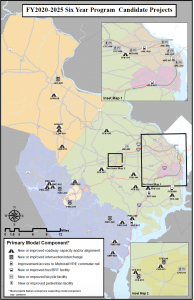 The most recent update to the TransAction Plan, adopted in December 2022, identifies more than 400 multimodal projects, totaling an estimated $75 billion in potential investments through 2045. As of this writing, only 11 NVTA bicycle-pedestrian projects have been funded with $131.4 million allocated. Many of the larger road projects, however, include bicycle-pedestrian improvements.
The funded bicycle-pedestrian projects in Fairfax County include the Herndon Metrorail intermodal access improvements (completed in 2023), Blenheim Boulevard (formerly, Old Lee Highway) multimodal improvements in the City of Fairfax (September 2025) and Holmes Run Trail construction and improvements in Alexandria (2027). Other long range projects in the plan include protected bike lanes on both sides of Route 7 between Alexandria and Seven Corners, a trail along Route 7 from Leesburg to Alexandria, and a trail along Route 29 from Dixie Hill Road to East Falls Church Metrorail Station and other improvements.
Since those early days, FABB has worked tirelessly to address the challenges of regional coordination and outdated planning. We have advocated for adding more bike projects to county and regional plans, updating maps, and ensuring funding allocations reflect the growing demand for safe, accessible biking options.
The 2008 public hearing was a turning point that highlighted the importance of showing up and making bicycling voices heard. While progress has been made, such as the growing network of bike lanes and trails and bike sharing facilities, the need for continued advocacy remains strong. The regular updates to the TransAction Plan and NVTA’s Six-Year Program offer opportunities to further integrate bicycling infrastructure into broader transportation plans, ensuring a safer, more connected network for riders across the region.
FABB remains dedicated to ensuring that bicyclists’ needs are prioritized in future planning and funding decisions. As we look to the future, we encourage all riders to stay engaged in the process and join us in advocating for a better, more connected bicycle network in Fairfax County.
Together, we can continue building on the momentum started all those years ago and work toward a future where bicycling is a safe, accessible, and integral part of our transportation system.


