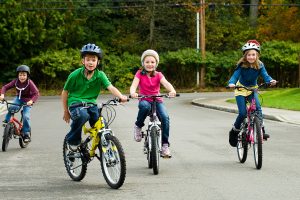
 FABB wants to draw your attention to a recent piece in The Atlantic by Erin Sagen titled “A Classic Childhood Pastime Is Fading.” It’s a beautifully written, sobering look at how childhood biking—a sight once as common as neighborhood mailboxes—has quietly slipped away.
Sagen documents the steep drop in the number of kids who bike today compared to a generation ago. In the 1990s, more than 20 million children ages 7 to 17 regularly rode bikes. That figure has now fallen by nearly half, with fewer than 5 percent riding “frequently.” It’s a loss that extends beyond recreation. As the article makes clear, biking builds independence, physical health, resilience, and a critical spatial awareness of one’s community. It’s also one of the most affordable, accessible ways for kids to get moving—without relying on adults to chauffeur them from place to place.
So what’s changed? A lot of it comes down to how our streets have evolved. Roads have become wider and faster. Cars are dramatically bigger and heavier than they were just 30 years ago. As vehicles have grown, children’s freedom to roam has shrunk. Parents are understandably wary: SUVs are eight times more likely than sedans to kill a child in a crash. Meanwhile, the share of K–8 students walking or biking to school plummeted from 48 percent in 1969 to just 13 percent by 2009.
Sagen points out that bringing back kids on bikes means creating safer spaces for them. That means calmer traffic, slower speeds, protected bike lanes, and intersections designed with people—not just cars—in mind.
What This Means for Fairfax County
FABB couldn’t agree more. For twenty years, we’ve been working to make bicycling safer and more accessible for everyone in Fairfax County, and that absolutely includes kids. Local parents often tell us they’d love to let their children bike to school, to a friend’s house, or to the local park—but they just don’t feel it’s safe. And with our county’s wide, busy roads and sprawling development patterns, who can blame them?
This is why our advocacy matters. Every protected bike lane, every traffic-calmed intersection, every safe trail connection we win makes it a little more possible for kids to hop on their bikes and experience the freedom we took for granted a generation ago.
Let’s Keep Pushing for Change
FABB proudly endorses this article’s call to reimagine our streets—not just for cars, but for kids on bikes, for parents on foot, for neighbors who want to connect. We’ll keep fighting for better bicycling infrastructure, education, and policies that can help restore the independence, joy, and resilience that come when kids can safely explore their world on two wheels.
Want to be part of this work?
Join FABB or reach out to us at [email protected]. Together, we can make sure the next generation in Fairfax County gets to grow up with the same freedom, fun, and life skills that come from riding a bike down their very own street.


